The course of the war in Ukraine
as it progresses day by day
-
October 11, 2026
Sunday
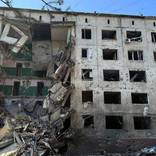
Yesterday, Trump told Volodymyr Zelenskyy, regarding the attacks on Russian refineries, to “stop it already,” adding that Ukraine should have a “new president.” All this came just a few days after his administration authorized the import of Russian oil into the United States through April 2027. Zelenskyy responded today in a way that was to be expected: Ukraine is willing to stop bombing Russian refineries the moment Russia stops bombing Ukraine’s energy infrastructure. “The real cause of the war in Europe is Russia, and Russia alone,” he said, noting that any de-escalation must be mutual and backed by real guarantees, because Russia has violated agreed-upon ceasefires so many times that a promise alone is not enough. According to him, an energy ceasefire is achievable right now; it’s just that Putin doesn’t want it. Let’s recall a context that seems to have been overlooked in Washington: On October 8, Russian attacks on the power grid plunged Kyiv into near-total darkness, and they have not ceased since then. In September, the General Staff estimated that 45 percent of Russia’s refining capacity is idle. In other words, the very strikes that Kyiv is supposed to stop are the ones working best of all. And this also happened:
More
- Russia’s Yandex lost its third data center in four days. Following the centers in Sasovo in the Ryazan Region and Kaluga, the company today completely shut down operations in the Vladimir Region, where a fire broke out after a drone attack, according to the TASS news agency. Yandex Cloud acknowledged this morning a “power outage in the ru-central1-a availability zone,” which corresponds to the Vladimir facility. According to the Ostorozhno Novosti channel, people across Russia were unable to order taxis today; customers in Serbia, Kazakhstan, Belarus, and Armenia reported the same difficulties. The Yandex Pro app for drivers and couriers, as well as smart home services, were not functioning. Yesterday, the company added drone and missile attacks to its terms of service as a force majeure event that relieves it of its obligations.
- Ukrainian drones damaged the bascule railway bridge over the Don River between Rostov-on-Don and Bataysk. Service had to be suspended on both tracks, and Russia acknowledged delays affecting 25 long-distance trains on routes from Moscow and St. Petersburg to Adler, Novorossiysk, Anapa, and Mineralnye Vody. Tavriya trains bound for occupied Crimea were delayed by up to three and a half hours. According to open-source reports, this is a key logistics hub for the Russian military, through which military cargo and reinforcements are transported to the southern front. Monitoring channels reported possible damage to the lifting mechanism itself, though this has not been officially confirmed. Meanwhile, the ATESH movement had already reported on October 6 that Russia was fortifying bridges across the Don River against drones.
- Last night, Russia launched an attack using 116 Shahed-type attack drones, 95 of which were jet-powered, along with Gerber drones and Parodija decoys. According to preliminary data from the Air Force, air defenses shot down or neutralized 94 of them, including 74 jet-powered Shaheds; ten drones struck seven locations, and debris fell at nine sites. Over the past day, Russian attacks have killed at least two people and injured 25. In the Dnipropetrovsk region, an 11-year-old boy was killed and nine people were injured, including two 8-year-old girls; in the Donetsk region, one person was killed and four were injured; in Kharkiv, six were injured, including a child; in the Kyiv region, four were injured; in Sumy, two were injured; and in Kherson, one was injured.
- Latvia, Lithuania, and Estonia sent a joint letter calling for a ban on the transit of Russian grain through European Union territory, a halt to the export of grain stolen from occupied Ukrainian territories, and the strengthening of the Solidarity Corridors between the EU and Ukraine. “The European Union must not become a conduit through which Russia offsets the economic consequences of its own aggression,” the letter states. Ukrainian Agriculture Minister Taras Vysotsky welcomed the initiative; the prime ministers of the three Baltic states will meet with other leaders on October 14 in Brussels, where Zelenskyy will also be present.
- Eighteen Ukrainian companies already have permits to export finished weapons. According to its head, Davyd Alojana, the Export Control Commission has processed more than 400 applications and approved over 90 percent of them. Ukraine’s arms production capacity is expected to reach $55 billion this year, compared to roughly $1 billion annually at the start of the invasion; in some categories, Ukraine produces up to 50 percent more than it can use or afford. The Ministry of Defense and the General Staff retain the right of first refusal.
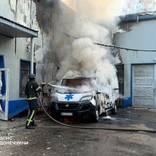
- Around 5:00 a.m., a Russian drone struck an ambulance near Sum that was heading toward the exit. The 44-year-old driver and the 59-year-old paramedic were injured; according to preliminary reports, their injuries were not serious. The crew managed to get out of the damaged vehicle on their own, and their colleagues then transported them away despite the risk of a second strike.
- According to the Financial Times, which cites five European intelligence agencies, Russia’s military intelligence service, the GRU, has stepped up attempts to assassinate top executives at European defense contractors. The goal is reportedly to weaken support for Ukraine. In response, the companies have stepped up personal security for their executives.
- Dutch Defense Minister Dilan Yeşilgöz-Zegerius stated that the Netherlands considers Russia an enemy, not merely an aggressor. “Russia is our enemy. And no, that doesn’t mean we’re at war,” she said. No other European Union country has yet phrased it so explicitly.
- Overnight, Ukrainian drones struck a Russian air defense position in Sochi, specifically in the Sirius area. During the same wave of attacks, Sochi’s oil infrastructure was also hit; the images show six destroyed tanks at the Rosneft depot and three damaged or destroyed tanks at Lukoil-Yugnefteprodukt.
- Estonian Prime Minister Kristen Michal called the U.S. decision to lift sanctions on Russian oil a historic mistake. According to him, Estonia restricted imports of Russian fuel precisely at the urging of the United States, so it is necessary to continue cutting off Moscow’s revenue streams.
- Even after the U.S. market opens up, Australia will still not allow Russian fuel to enter the country. According to Australian officials, they do not want Vladimir Putin to profit from the war in the Middle East.
- In the first nine months of the year, the European Union imported a record 12.18 million metric tons of Russian liquefied natural gas from the Arctic, 9.5 percent more than last year.
- The death toll from yesterday’s guided missile strike on a residential neighborhood in Zaporizhzhia has risen to 20, including three children; 32 people were injured.
- The Japanese Ministry of Defense has signed a contract to purchase Ukrainian interceptor drones from SkyFall.
- Spain and Greece have refused to hand over Patriot missiles, which are nearing the end of their service life, to Ukraine.
🔗Interesting videos
-
October 10, 2026
Saturday
Russia dropped five guided aerial bombs on residential neighborhoods in Zaporizhzhia, and one of them destroyed the entrance to a five-story building down to the second floor. By the afternoon, the death toll had risen to fifteen, including three children; according to Interior Minister Ivan Vyhivsky, seventeen people were injured. Rescue workers pulled one woman alive from the rubble after eight hours; at least 26 buildings in the Shevchenkivskyi and Voznesenivskyi districts were damaged, and the fate of others trapped under the rubble remained unclear even in the afternoon. The prosecutor’s office is investigating the incident as another war crime. Zelenskyy put it bluntly: this is Russia’s “thank you” for Washington lifting sanctions on Russian oil the day before. According to him, Russia interprets any easing of pressure as a signal to continue the war, and the world must start sending it different signals. The day before, another Russian attack in Zaporizhzhia killed 23 people. Another report is also related to all of this:
More
- The U.S. Department of the Treasury has issued a license authorizing the sale, shipment, and import of Russian oil through April 7, 2027. Trump announced that he and Putin had agreed to ease sanctions in order to bring down fuel prices, and he promised that prices would fall at a “record pace.” Russia is to immediately release 300,000 metric tons onto the market, followed by another 500,000 in November and then one million; Trump even spoke of three million metric tons “in the very near future.” Deputy Prime Minister Novak confirmed that Moscow is prepared to increase supplies. Crude oil futures fell by 4 percent following the announcement, but they are still more than 110 percent above January’s level. Republican Don Bacon spoke of “moral blindness” toward Putin, while Democrat Richard Blumenthal spoke of a stain on the character of the American people and warned U.S. companies that “Congress is watching.”
- According to Axios, U.S. negotiators Steve Witkoff and Jared Kushner threatened the Ukrainian side during talks in Miami that Ukraine could lose access to U.S. intelligence if it did not stop attacking Russian refineries. Trump reportedly asked Zelenskyy to do this about six times, and Kyiv ignored him each time; only then was the decision made to allow the purchase of Russian oil. The same official claims that Zelenskyy “misreads the situation” and “is squandering the goodwill Trump has shown him over the past six months.” According to Trump, the attacks on refineries are driving up fuel prices in the U.S., and Trump does not view them as a proportionate response to Russian attacks on Ukraine’s energy infrastructure. According to sources, Witkoff and Kushner are considering traveling to Moscow and Kyiv next week with a new peace proposal.
- In Kyiv, after an energy facility in the Kyiv region was struck around 1:00 p.m., the metro and escalators came to a halt because power from external sources was cut off. Kyivpastrans immediately suspended electric transit in the Holosiivskyi district and, to some extent, in the Solomianskyi, Shevchenkivskyi, and Pecherskyi districts. Metro service resumed about an hour later, but with intervals of fifteen minutes or more. Vitali Klitschko also reported problems with water supply. In the Solomyanskyi district, debris from drones fell on a 25-story residential building and an 8-story office building.
- Ombudsman Dmytro Lubinec reported that Russian troops, under the pretext of an “evacuation,” took away 25 residents of the occupied part of the Kharkiv region, including children and the elderly. The occupiers are presenting this on Telegram as a “rescue operation,” but videos show coercion and intimidation. Lubinec is most concerned about the children, whose parents may have no idea where they are, and he warns against a Telegram bot that the Russians are using to collect personal data.
- Belarus summoned Ukrainian chargé d’affaires Ivan Novitsky over a drone attack on a truck with Belarusian license plates in the Bryansk region, in which a Belarusian citizen was seriously injured. Minsk claims the attack was intentional and reserves the right to take “appropriate retaliatory measures.” The Ukrainian Foreign Ministry rejected the accusations as baseless and reminded Minsk that it is an accomplice to Russian aggression.
- Speaking on behalf of the Kremlin, Yuri Ushakov described Friday’s phone call as follows: Putin rejected the resumption of peace talks and confirmed that Russia will wage war “until it achieves all its stated goals.” According to Ushakov, Trump wished him a happy birthday, wished him success, and conveyed greetings from the First Lady. Putin also accused Ukraine of trying to interfere in the Russian elections and claimed that his troops “fully hold the initiative” and are advancing.
- Overnight, Russia launched 160 drones toward Ukraine, 110 of which were jet-powered, including Shaheds, Gerbers, and Parodiya decoys. They were launched from Orel, Kursk, Shatalov, Millerovo, and Primorsko-Akhtarsk, as well as from occupied Donetsk and Hvardijsk in Crimea; the attack began at 6 p.m. and was still ongoing in the morning. Air defenses shot down 117 targets; hits were reported from fourteen locations, and debris fell in ten others.
- NATO and the EU are pressuring Greece and Spain to transfer Patriot PAC-2 missiles to Ukraine, as these missiles are nearing the end of their certified 23-year service life. According to The Telegraph, Athens has at least 200 of them; Spain’s stockpiles are classified, and Madrid confirmed the delivery of five units in September. Zelenskyy has spoken of the need for 300 to 360 anti-missile systems for the winter.
- In Rostov-on-Don, the terminal of the Novoshakhtinsky Oil Products Plant—formerly known as Yug Rusi—caught fire following a nighttime drone attack; the plant has a design capacity of approximately 2.5 million metric tons per year. The terminal handles the transshipment of oil products for export and supplies fuel to the Russian military.
- The General Staff confirmed a repeat strike on the Samara oil hub near the village of Prosvet in the Samara Region. The facility receives oil via pipeline from Tatarstan and Western Siberia and blends it into the Urals export blend. The extent of the damage is still being assessed; during the attack on October 7, four 50,000-liter tanks there were destroyed by fire.
- During a recent airstrike on a Russian command post near Donetsk, some twenty Russian officers from the 41st Army were reportedly killed—18 at the scene and another two in the hospital. Among them are seven colonels, six lieutenants, five majors, one captain, and one senior lieutenant.
- According to the Financial Times, Ukraine has no intention of halting its attacks on Russian refineries, even after Trump’s agreement with Putin. Kyiv had previously reiterated that it was prepared to stop if Russia ceased bombing Ukraine’s energy sector and civilian infrastructure.
- The compromise version of the EU budget maintains support for Ukraine but cuts funding earmarked for its European integration.
- The leader of Russia’s Yabloko party was fined for anti-war slogans written on Duma ballots.
🔗Interesting videos
-
October 9, 2026
Friday
Ukrainian drones made a nighttime foray nearly as far as the Arctic Circle. In Ukhta, in the Komi Republic—nearly 1,700 kilometers from the Ukrainian border—a column of black smoke rose above the Lukoil-Ukhtaneftepererabotka refinery following an airstrike. Meanwhile, in the Tver Region, the Redkinsky Experimental Plant—which manufactures components for the Decilin-M fuel mixture used in the Kh-55 and Kh-101 cruise missiles, the very missiles Russia is using to strike Ukraine’s energy infrastructure—caught fire. And in the Kaluga region, several modules of the Yandex data center were completely destroyed—the second Russian data center belonging to the same company to be hit in two days. Following the attacks on Ukrainian data centers, Zelenskyy put it quite succinctly: “We always respond in kind.” Meanwhile, Yandex has removed its data centers from maps. As if that would help anything. And this also happened:
More
- A Ukrainian delegation arrived in Miami for two days of talks with U.S. negotiators Steve Witkoff and Jared Kushner. Representing Kyiv were Kyrylo Budanov, head of the Presidential Office; his first deputy, Serhiy Kyslytsya; Rustem Umerov, director of foreign intelligence; and Davyd Arachamiya, chairman of the Servant of the People parliamentary faction. Washington also invited national security advisors from the United Kingdom, France, and Germany, as well as representatives from NATO and the EU. On the table are security guarantees for Ukraine, a postwar reconstruction plan, and, according to Axios, a partial ceasefire that would be limited to attacks on the energy sector and grain exports. Ukraine has already indicated that it would agree to this, while Russia has remained silent so far. Witkoff and Kushner are expected to travel to Moscow to meet with Putin in October—their third visit this year. The Trump administration is seeking a breakthrough in the negotiations before the U.S. congressional elections and before winter sets in fully.
- Montenegro has detained Mikhail Zvinchuk, the founder of the pro-war Telegram channel Rybar, along with his wife and three associates. The former press officer of the Russian Ministry of Defense is on sanctions lists, and the U.S. State Department is offering up to $10 million for information leading to him and members of Rybar in connection with interference in (not only) U.S. elections and influence operations. According to Montenegrin media, this was a joint operation by the police and intelligence services against the hybrid activities of Russian information networks. The group was reportedly filming material in the country intended to damage Montenegro’s tourism industry and economy. Prime Minister Milojko Spajić wrote on X that Montenegro is protecting its interests and that no one will jeopardize its European future.
- After more than twelve hours, Austrian police released Ukrainian investigative journalist Mykhailo Tkach, head of the investigative department at Ukrayinska Pravda. He was in Vienna on an editorial assignment, investigating the fugitive former Prosecutor General Ruslan Kravchenko, whom NABU and SAPO suspect, as part of Operation Carthage, of covering up fraudulent call centers in exchange for bribes. Cameraman Yaroslav Bondarenko was also detained; according to editor-in-chief Sevgil Musayeva, he was injured during the raid. The Ministry of Foreign Affairs confirmed Tkach’s release, but the editorial office called the detention unlawful and is demanding that Austria explain the circumstances, provide information on Bondarenko’s condition, and return the confiscated phones.
- Over the past day, Russian attacks in Ukraine have killed at least 41 people and injured 67. The Donetsk region has been hit the hardest, followed by the Zaporizhzhia region, with 1,039 strikes across 51 municipalities. Between 4:50 and 5:59 a.m., six guided bombs struck Zaporizhzhia itself, killing one person and injuring nine, including a child; police and firefighters evacuated twelve people. Overnight, Russia deployed 136 drones, including 93 jet-powered Shaheds; air defenses shot down or neutralized 114 of them. On the outskirts of Chernihiv, a Geran-type drone set a hypermarket on fire.
- Ukrenergo reports new power outages in Kyiv and six regions: Chernihiv, Kharkiv, Donetsk, Zaporizhzhia, Dnipropetrovsk, and Odesa. In some of these regions, hourly schedules and restrictions on industrial use are in effect. At 9:30 a.m., consumption was 11.4 percent higher than the previous day because it was cloudy in the west and residential solar panels could not keep up with demand. A Russian drone struck a power facility in the Poltava region, cutting off electricity to 6,000 customers.
- British Foreign Secretary Ed Miliband, during his first visit to Ukraine in this capacity, announced a winter aid package worth 54 million pounds, or about 71 million dollars. Twenty million will go toward emergency repairs to energy grids, backup generators, and solar power systems, with another 34 million to maintain heating and water infrastructure throughout the winter. According to Miliband, the package sends a message to Putin that the British will not be easily worn down.
- Teddy Young, a sailor in the British Royal Navy and a 24-year-old military intelligence specialist with a high-level security clearance, appeared in court for the first time. According to the indictment, between November 2024 and May 2025, he collected classified information for the benefit of a foreign power and wrote a report in Russian containing classified data. The judge remanded him in custody; the next hearing is scheduled for October 16.
- The Rating Agency released a poll conducted from October 3 to 5. In a hypothetical first round of the presidential election, Volodymyr Zelenskyy would receive 22.9 percent, Valeriy Zaluzhnyy 20.2 percent, Petro Poroshenko and Mykhailo Fedorov 7.6 percent each, Kyrylo Budanov 6.7 percent, Andriy Biletsky 5.4 percent, and Dmytro Razumkov 5.1 percent. 9.2 percent of the population remains undecided.
- At the Pidzamche station in Lviv, a Lviv-Sokal diesel train collided with an electric locomotive as it was departing. Five people were injured, and the train engineer was trapped in the cab. Railway experts are investigating the cause.
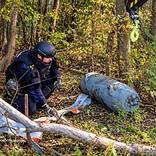
- Kyiv police officers defused two unexploded ballistic missiles that had landed near residential buildings. Each weighed half a metric ton.
- Kyiv Mayor Klitschko urged residents to leave for the winter. According to him, it will be a matter of sheer survival.
- Ukraine will participate in the Future Forces international defense exhibition and forum in Prague.
🔗Interesting videos
-
October 8, 2026
Thursday
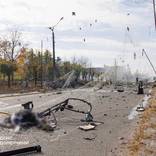
Two buses full of people were on the street in Kramatorsk this morning, on their way to work. A Russian glide bomb—likely a UMPB D-30 SN guided munition dropped from an aircraft—struck them one after the other. The first bomb shattered the bus into pieces; the second burned to a skeleton. The death toll rose throughout the day from twelve to thirty and eventually to 33 dead and eighteen injured; two bodies remained unidentified, and Zelenskyy warned that the number may not yet be final. It is one of the deadliest single strikes of the year. The head of the Donetsk Regional Administration, Vadym Filashkin, ordered public transportation to be suspended in Kramatorsk and Sloviansk, claiming that Ukraine “has no right to risk people’s lives,” and put it bluntly: a bus full of passengers is an “attractive target” for the Russians because a single strike can kill a large number of people. There was no response from Moscow; Russia simply continues to deny that it is attacking civilians. And, coincidentally, just today U.S. Secretary of State Marco Rubio declared that the war had reached a “strategic stalemate.” For the thirty-three people in Kramatorsk, however, it was unfortunately no stalemate at all. And this also happened:
More
- Britain announced 38 new entities on its sanctions list. Two oil companies, Zarubezhneft and INK Capital; twelve tankers from the shadow fleet, most of which are over twenty years old and sailing under false flags; six entities in the financial and crypto sectors; and seventeen in supply chains, including Russian importers of machine tools, electronics, and materials for the production of ballistic missiles and drones. The UK now covers more than 90 percent of Russia’s oil production capacity with sanctions and has a total of 3,537 sanctions against Russia. Among the affected crypto entities are Xeltox Enterprises, the owner of the Cryptomus exchange, and two platforms that processed transactions for the Kremlin’s illegal financial network, A7. According to its own claims, the network moved more than $90 billion last year—roughly half of Russia’s annual military spending.
- Peskov agreed with Rubio and stated that a path to a peaceful settlement “is not in sight at the moment,” that any agreement must last “for generations,” and that a temporary freeze on the conflict would not help; Deputy Foreign Minister Sergey Ryabkov had said the day before that no talks in the U.S.-led format are planned at this time. Zelenskyy rejected Rubio’s assessment of a “stalemate”: “We’ve heard all sorts of things during this war. We’re driving ourselves into a corner—the people, the leaders, the politicians—we’re doing this to ourselves.” And he offered a solution: “Shut down Russia’s entire economy. Shut its mouth. Stop feeding it with your sales.”
- The Russian command is redeploying additional forces from less critical sections of the front—namely, units from the Unmanned Systems Forces and Spetsnaz—toward the Sloviansk-Kramatorsk area, with the aim of capturing the urban area before winter. The ISW immediately dismissed this objective as a delusion. The institute also confirmed Ukrainian advances east of Oleksandrivka in the Dnipropetrovsk region and the liberation of Perebudova north of Komar—which even Russian milbloggers acknowledge—as well as ongoing successful counterattacks toward the eastern bank of the Zherebets River northeast of Lyman.
- Ukrainian drones struck the Yandex data center in Sasovo, in the Ryazan Region, overnight. It is the company’s largest data center, located on the grounds of the Sasta engineering plant, a manufacturer of metalworking and CNC machines that has been subject to British sanctions since 2024. Yandex announced that operations in Sasovo had been fully suspended, as evidenced by subsequent internet outages. Yandex shares fell by more than 3.4 percent on the Moscow Stock Exchange.
- RFE/RL has published an intercepted Russian plan for strikes against sixty strategic energy and utility targets in Ukraine. The list includes ten large hydroelectric power plants on the Dnieper and Dniester rivers, three operational nuclear power plants that are to be disconnected from the grid, cross-border interconnectors in the west of the country, thermal power plants and heating plants, high-voltage substations, boiler rooms, wastewater treatment plants, and water pumps.
- Reuters, citing five people familiar with the talks, reported that top Russian and U.S. officials, including Special Envoy Jared Kushner, discussed the involvement of a U.S. investor in the Nord Stream gas pipelines. According to Reuters, Dmitriev and Kushner also discussed the sale of Lukoil’s European assets to a consortium comprising the U.S.-based DFC and investors from Qatar and the UAE, on the condition that the U.S. lift sanctions.
- Admiral Giuseppe Cavo Dragone, Chairman of the NATO Military Committee, stated in Kyiv that the Alliance has decided to provide Ukraine with $70 billion worth of military equipment this year and the same amount in 2027. He also called on member countries to determine how much 20mm ammunition they can send to Ukraine immediately.
- The General Staff confirmed a strike on the Gazprom Neftekhim Salavat oil and petrochemical complex in Bashkortostan, where a fire broke out following the attack, as well as a strike on the largest refinery in the Omsk region—located more than 2,500 kilometers from Ukraine—carried out by upgraded FP-1 drones.
- EU ambassadors agreed on the largest expansion of the sanctions list since 2022: 743 individuals and 826 entities. The total number of individuals and entities subject to EU war sanctions will rise to nearly 4,650. Foreign ministers are set to formally approve the list on Monday in Luxembourg.
- Zelenskyy announced that the Ukrainian negotiating team will travel to the U.S. on October 9 and 10 for talks, and called on Washington to grant Ukraine access to Starlink over Russian territory: “Help us defend the skies and dominate them. Then Putin will sit down at the negotiating table.”
- Overnight, Russia launched 142 Shahed, Gerbera, and Parodie attack and decoy drones at Ukraine, 82 of which were jet-powered. Air defenses shot down 126 drones; hits were reported from seven locations, and debris was found at four.
- In the Kyiv region, a school with a preschool and a playground were damaged in a drone attack, and one person was injured. The Ministry of Energy also urged people not to post footage from the sites of the attacks, as it aids the enemy and endangers repair crews.
- The Polish military prosecutor’s office found SIM cards from Polish mobile carriers in some of the Russian Gerbera drones that entered Polish airspace on the night of September 9–10, 2025.
- Lithuanian Prime Minister Mindaugas Sinkevičius has called for EU sanctions against Russian grain. Lithuania will push for a ban on transit and for Russian agricultural oligarchs to be added to the sanctions list.
- The AfD and BSW have won a majority in the parliament of the first East German state. Their first joint proposal: to end aid to Ukraine and restore relations with Russia.
- According to a survey by Rating Group, 64 percent of Ukrainians trust Zaluzhny, while 53 percent trust both Zelensky and Budanov.
- South Korea will recall its ambassador to Ukraine, Park Hee-chang.
- Marine Le Pen has spoken out against Ukraine’s membership in the EU.
🔗Interesting videos
-
October 7, 2026
Wednesday
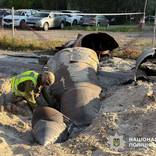
It’s Putin’s birthday, and his generals apparently knew what he wanted. Overnight, they fired 183 projectiles at Ukraine: five Iskander-M ballistic missiles, North Korean KN-23s, and S-400 anti-aircraft missiles launched along a ballistic trajectory, plus Zircons and Onyxes, 48 Kh-101 cruise missiles, Iskander-K and Kalibr missiles, and 130 attack drones, 46 of which were jet-powered. Air defenses intercepted 161 targets; strikes have been reported in eighteen locations in Kyiv and twelve regions. The worst damage occurred in Pryluky in the Chernihiv region, where a missile destroyed two entrances to a five-story prefabricated apartment building and killed nine people, including three children. By noon, the total death toll from the night’s attacks had risen to fifteen, with over forty injured. Zelenskyy stated that the key target was the energy sector and that Russia wanted to strike “painfully and demonstratively”—and the demonstration was successful, because in Pryluky, a building where the families of gas company employees lived was burned to the ground, and the rest of the city was left without gas. Foreign Minister Andriy Sybiha summed it up succinctly: “For Putin’s birthday, Russian generals gave him his favorite gift: war crimes.” He added that perhaps his final gift will be a prison cell in The Hague. And this also happened:
More
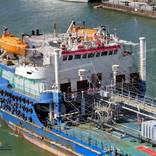
- The Aframax oil tanker Rio, carrying between 95,000 and 100,000 metric tons of oil, has been burning in the Black Sea since early yesterday evening, when it was struck by naval drones 11 kilometers from Sochi. The ship is flying the Liberian flag, is en route from Novorossiysk to India, and has been on Ukraine’s sanctions list since February as part of Russia’s shadow fleet. All twenty-three crew members, all Indian nationals, have been rescued. The Russian Ministry of Transport announced today that “oil is currently burning in the Black Sea” and that firefighting operations can begin only once the intensity of the fire has subsided enough for rescue vessels to approach safely. Putin’s residence, Bocharov Ruchey, is located about thirty kilometers from the site of the incident.
- Following the nighttime attack, some residents were left without power in the Vinnytsia, Kharkiv, Kherson, Poltava, and Chernihiv regions, and Ukrenergo began emergency repairs wherever the security situation permitted. Hourly power outages are in effect today in Kyiv and six regions—Sumy, Poltava, Cherkasy, Zhytomyr, Kharkiv, and Chernihiv—ranging from half to one and a half groups; in addition, power limits are in effect for industry and businesses. Ukrenergo states that the extent of the blackouts has not changed since the attack and recommends using high-power appliances between 10:00 a.m. and 4:00 p.m., when solar power generation is at its peak.
- According to Ukrainian air defense forces, Russian drones could reach speeds of 800 to 900 kilometers per hour in the future. Ukraine is currently shooting down about 57 percent of them, while the success rate for conventional Shahed drones is 85 to 90 percent. Five models of interceptor drones are being tested, but they will not be available in sufficient quantities until late November at the earliest. According to spokesperson Cherevashchenko, the F-16 is one of the most effective weapons against jet-powered drones, but the aircraft consume resources at an extremely high rate, and Ukraine is in critical need of assistance from its partners.
- At the Latvian-Belarusian border, armed, masked individuals threatened Latvian soldiers and actively pushed a group of at least twenty migrants toward Latvia. A few hours later, the masked men entered Latvian territory, damaged electrical wiring, and stole two cameras. Interior Minister Jānis Dombrava warned that “Belarus should understand that such incidents could lead to more serious consequences for Belarus itself.” This year alone, Latvia has blocked 11,925 attempts to cross the border illegally.
- The ISW confirms Ukrainian advances north and northeast of Lyman as part of Operation Vivaldi, near Yampolivka and along the Zherebets River, as well as Ukrainian control of Rai-Oleksandrivka east of Sloviansk, the expansion of counterattacks in the Kostiantynivka direction near Rusyn Yar, and the holding of positions southeast of Novoselivka, west of Orikhiv. The institute does not confirm any Russian advances anywhere. DeepState, on the other hand, has documented a Russian advance near Bilytske in the Donetsk region.
- Bulgaria today called off the search for the crew of a cargo ship that sank following an overnight drone attack in its exclusive economic zone, about 130 kilometers off the coast; some sailors remain missing. Eighteen people were rescued from the second vessel that was struck, two of whom are seriously injured. President Iliana Yotova convened the Consultative Council for National Security in response to the attacks.
- Zelenskyy announced that over the past 24 hours, Ukrainian forces had struck four targets that “help Russia finance and wage its brutal war”: two oil facilities and a military training ground in the Perm Krai, Samara Oblast, and Astrakhan Oblast, as well as an operation in the Black Sea. He described these as “justified Ukrainian responses to all Russian attacks against our people.”
- The SBU has uncovered a Russian propaganda operation in the occupied town of Oleshky. According to the SBU, the occupation administration was ordered to involve local residents in a series of videos on a predetermined topic: accusing Ukrainian defense forces of shelling and blockading the town, discrediting the Ukrainian leadership, and thanking Russian soldiers.
- Donald Trump announced that he will speak with Putin “very soon” regarding the unexplained death at a Russian research facility in Irkutsk, where a case of pneumonic plague is suspected. The United States has issued a health alert, while the World Health Organization has assessed the risk of spread as low.
- The new high-voltage power line between Moldova and Romania will be called the Trump Liberty Line. The U.S. Embassy in Chisinau made the announcement; the U.S. investment in the interconnection is expected to total $130 million.
- The UN Human Rights Council in Geneva extended the mandate of the Special Rapporteur on Russia by a vote of 21 to 5. China, Cuba, Ethiopia, Burundi, and Vietnam voted against the resolution, while Brazil, India, Mexico, and South Africa, among others, abstained.
- Slovak Defense Minister Robert Kaliňák rejected Germany’s assessment of Russia as the main threat to European freedom. “I disagree with it because we do not view Russia as a threat to Slovakia,” he said.
🔗Interesting videos
- Updated RuAF Losses
- Sochi
- Sochi, too
- The “bird hospital” burned down after a Russian airstrike
- Humvee Robot
- Firefighters pulled a child from the rubble
- Add to Collection
- A Russian drone struck civilian cars
- Russian rocket
- Another memorial to North Korean soldiers from the “SVO”
- Dnipro
- POV: Russian in the Crosshairs
-
October 6, 2026
Tuesday
Last night, Moscow got its first real taste of the war it has been waging for four years now, and discovered that jet fuel burns just as well in the Ramenskoye District as it does in Kharkiv. Mayor Sergey Sobyanin counted 650 Ukrainian drones over the Moscow region. Russian state media called it the largest drone attack on the Moscow region in two years. The main target was the Volodarskaya pumping station near the village of Konstantinovo, about forty kilometers from the center of Moscow, which is operated by the state-owned company Transnefteprodukt. It is the largest oil storage facility in the region, handling up to three million metric tons of petroleum products annually; it has 27 tanks with a total capacity of around 250,000 cubic meters and supplies jet fuel via pipeline to Vnukovo, Domodedovo, and Sheremetyevo airports. According to the independent Russian channel ASTRA and geolocated footage, two tanks were on fire. Rosaviatsiya suspended operations at four airports, including Zhukovsky. No Russian official has admitted to the attack on the oil depot, and Ukraine has not yet officially confirmed it; however, the photos and videos do not lie. Vorobyov only acknowledged two deaths, six injuries, and damage to homes in several villages. And this also happened:
More
- In Bulgaria’s exclusive economic zone, maritime and aerial drones attacked two commercial vessels about eighty miles off the coast of Bjala in the Varna region. The Togolese-flagged cargo ship ALFA WATAN, sailing from Turkey to Romania, sank, while the Palauan-flagged motor vessel ABLE caught fire; its entire crew of 18 was rescued by the Bulgarian ferry DIOSCURIA. The vessel MERCY, flying the flag of Saint Kitts and Nevis, also participated in the rescue. The sailors include Turks and Indians; two of them have burns and head injuries. Prime Minister Rumen Radev convened an emergency meeting with representatives from four ministries, the Office of the President, and the security services, and described the attack as absolutely unacceptable and a flagrant violation of international and maritime law. For Bulgaria, this is the first attack of this kind in its economic zone. This is already the third civilian vessel struck in two days; according to Russian media outlets, all of them had previously been sailing to Ukrainian ports on the Danube.
- Ukraine has put Turkish Korkut self-propelled anti-aircraft guns—a more modern version of the German Gepard—into service. The battery consists of a command vehicle and three units, each equipped with a pair of radar-guided 35-millimeter cannons, and costs around $37 million. In September, Ukrainian air defenses shot down 90 percent of the slower Geran-2 propeller-driven drones, but only 55 percent of the jet-powered Geran-4 and Geran-5 drones, which fly at around 600 kilometers per hour. The Korkuts could change these statistics.
- South Korean ports shipped over 176,000 metric tons of fuel, mostly diesel, to Russia in July and August. Seven Russian tankers made fourteen voyages there; three of them are on the sanctions lists of the United Kingdom and the European Union, and part of the cargo was transferred from ship to ship directly at sea. This does not violate South Korean law; export restrictions cover electronics, machinery, and vehicles, but not fuel. The Foreign Ministry in Seoul stated that “the country remains a responsible member of the international community.”
- In Kramatorsk, Russian FPV drones struck three ambulances within 25 minutes last night. A residential building was also hit; a 49-year-old woman was killed, and a 68-year-old woman suffered a broken leg and shrapnel wounds. Three paramedics suffered blast injuries, shrapnel wounds, burns, and other injuries. The Donetsk Regional Prosecutor’s Office has opened an investigation into war crimes related to both incidents and has characterized the attacks on the ambulances as targeted.
- The Ukrainian SBU detained a man in Kyiv suspected of setting up radio relay stations for Russian drones. According to investigators, between September 21 and 24, he collected data on defense facilities and critical infrastructure and, over the course of four days, guided Geran-5 jet drones and ballistic missiles toward Kyiv. He used mesh radio networks, which allow for real-time signal sharing between a drone in the air and a ground-based relay station. He is suspected of collaborating with the FSB.
- The Lithuanian parliament approved, on first reading, a constitutional amendment that would repeal Article 137, which prohibits weapons of mass destruction and foreign military bases on Lithuanian territory. 106 lawmakers voted in favor, 18 against, and six abstained. The Kremlin has already warned that it will respond.
- Russia launched 137 attack drones overnight. Air defenses shot down or intercepted 114 drones; strikes were reported in 17 locations, and debris fell in four others. Over the past day, Russian attacks in Ukraine have killed at least 13 people and injured 104.
- In Zaporizhzhia, a Russian drone struck one of the bridges over the Dnieper River. A crater was left in the roadway, a civilian car caught fire, and traffic across the bridge had to be rerouted. Five people were injured, including two Red Cross workers, aged 43 and 54, who were driving across the bridge on their way to work.
- Ukrainian forces have begun deploying automated, remote-controlled turrets equipped with M2 Browning machine guns around major cities to counter low-flying Russian drones. The system is called Sky Sentinels and is being tested in combat near Kharkiv.
- Seoul considers Ukraine’s apology for publicizing the transfer of two North Korean prisoners to be insufficient and is considering recalling its ambassador from Kyiv.
- The Omega Telekom data center in Kyiv suspended operations following overnight attacks and is rerouting communication channels to backup centers.
- In Kryvyi Rih, Banderol missiles struck a hospital in the city center. Four people were injured, two of whom are medical personnel.
- Germany has detained former intelligence chief Hanning on suspicion of spying for foreign powers.
- U.S. Secretary of State Marco Rubio said that Washington has no plans to withdraw diplomats from Kyiv.
🔗Interesting videos
-

October 5, 2026
Monday
While the world’s major cities are still debating what format of peace talks would suit Putin best, Russia has devastated Kharkiv. The city suffered two major strikes in a single day. Overnight, Banderol jet drones struck the city in a classic “double-tap” attack, in which the second strike targets the area where people and firefighters have already gathered. The attack left one person dead and eight injured; at least ten multi-story buildings were damaged, and an office building and cars were on fire. Around 2:40 p.m., three guided aerial bombs struck the Slobidsky district, hitting a five-story residential building, the DBN company—which manufactures drywall panels for the reconstruction of destroyed buildings—and a tailor’s workshop. According to Oleg Synehubov, head of the Kharkiv Regional Administration, the afternoon airstrike left six people dead and fifty-nine injured, including three children. An 11-year-old girl is in critical condition. Rescue service spokesperson Yevhen Vasylenko reported that two people were pulled alive from the rubble. Mayor Ihor Terechov, however, warned that there may be others still trapped beneath the debris. It is worth noting that Putin and his propaganda machine consider Kharkiv a “Russian city.” And this also happened:
More
- Ukrainian drone strikes have already taken out more than 51 percent of Russia’s oil processing capacity. In mid-September, that figure stood at 45 percent. Defense Minister Yevhen Khmara described this as a significant blow to the enemy’s economy and its ability to wage aggression and supply its military units. According to the International Energy Agency, Russian production fell to 3.8 million barrels per day in June—the lowest level in twenty years—and by mid-September, 204 strikes on 28 major refineries had been confirmed. Repairs to secondary units take six to eight months. A Moscow refinery with a capacity of 250,000 barrels per day is expected to remain out of operation until early 2027. In addition, Ukraine has tripled its production and purchases of long-range drones this year. On September 28, Putin signed a decree restricting the publication of data on the status of refineries.
- Overnight, Russia launched more than 205 attack drones at Ukraine. By 8:00 a.m., air defenses had shot down or neutralized 172 of them; strikes were recorded at thirteen locations, and debris fell at three others. In the Sumy region, 45 strikes on 21 communities left one person dead and several injured; in Mykolaiv, a Banderol missile damaged warehouses and vehicles and injured one person; in the Dnipropetrovsk region, nearly fifty drone and artillery strikes across three districts left one person dead and one injured. In Sloviansk, three airstrikes killed one person and injured three others, including a child.
- Russian drones attacked the cargo ship Royad Mammadov, sailing under the flag of Saint Kitts and Nevis and owned by the Turkish company MG Shipping 5, in the Black Sea. It was carrying corn from Izmail, Ukraine, to Ravenna, Italy, and was struck in Romania’s exclusive economic zone, about nine nautical miles from the Pescăruș platform and twenty miles from the Romanian coast. The captain and another crew member were killed. Three people were injured. One sailor is missing, and eleven were rescued. The crew consisted of citizens of Azerbaijan and India. The ship caught fire after the strike and sank.
- Mykhailo Drapatyi, Commander-in-Chief of the Ukrainian Armed Forces, who has held the position since July, is decentralizing command on the front lines. Six operational groups have been formed, including two new ones: “Centr,” under the command of Andriy Biletsky, and “Azov,” under the command of Denys Prokopenko. Both have been assigned the toughest sectors in the Donetsk region, including Kramatorsk and Dobropillya. Drapatyj has placed several dozen senior officers, including colonels and brigadier generals, on reserve, while Serhiy Sobko and Emil Iškulov have been returned to active duty.
- Germany has signed fifteen agreements with Ukraine worth over 8.5 billion euros, including deals on anti-drone solutions, increased production of missiles for the Patriot and FREYJA systems, radars, and ground-based unmanned systems. The package is worth over 1.3 billion euros. Energy Minister Denys Shmyhal stated that Germany will contribute more than 557 million euros to the Ukrainian Energy Support Fund, and an additional 50 million will go toward the reconstruction of the New Safe Confinement at Chernobyl.
- Eight officers were killed in the crash of a Russian Tu-95MS bomber on September 29 near the village of Krasnoyarovo in the Amur Region; three of them are listed in the Ukrainian database “Book of Executioners” because they participated in organizing missile strikes against Ukraine. They are Andrei Lobanov, Fyodor Pavlyukov, and Andrei Gerasimov. Their identities were confirmed by Mediazona. The plane crashed during a training flight from the Ukrainka airbase.
- Estonia is gradually relocating the main units of its 1st Mechanized Brigade from Tapa to Jõhvi, which is about fifty kilometers from the Russian border, down from the previous 130 kilometers. At the same time, a new military base is being built in Narva with a capacity of up to 1,000 soldiers—200 in peacetime and an additional 800 in wartime.
- Satellite images of the Khanskaya airfield in Adygea, Russia, showed two aircraft parking bays completely burned out following a nighttime drone strike. According to the SBU, Su-35 and Su-34 aircraft and an air force munitions depot were hit. Russia trains military pilots at the same base.
- Ukrainian drones delivered about four metric tons of humanitarian aid to the occupied town of Oleshky—approximately 400 packages containing food, medicine, and supplies for children. More than 6,000 residents remain in Oleshky, including about 200 children.
- Putin has authorized the Italian group UniCredit to reorganize and sell its Russian subsidiary. A private investor from the United Arab Emirates is set to acquire UniCredit Bank Russia. The bank will retain its payments division.
- The Ukrainian army has a “Bolívar Battalion” led by a defected Venezuelan military officer, Colonel Jose David Chaparro. It consists of about 250 soldiers, mainly from Colombia, Chile, and Venezuela.
- At the Palanca border crossing in the Ștefan Vodă district of Moldova, a Russian projectile ricocheted upon impact and struck a civilian bus. A Moldovan border guard was injured.
- After a phone call with Emmanuel Macron, Zelenskyy announced that Ukrainian pilots will soon begin training on French Rafale fighter jets.
- For the first time, the Ukrainian Air Force shot down jet drones using automatic machine gun turrets equipped with artificial intelligence.
🔗Interesting videos